Jobber Route Dispatch
Problem
Jobber helps home service businesses dispatch crews. Most did it by text, whiteboard, or memory — which broke down as teams grew. No spatial view, no drive time awareness, no way to reorder mid-day without starting over.
The product
A map-first planning tool. Each crew gets a color-coded route, a timeline lane with drive gaps, and a live vehicle marker. A "Plan routes" button optimizes across all active crews. I focused on the dispatcher view — that's where the complexity lives.
Filtering
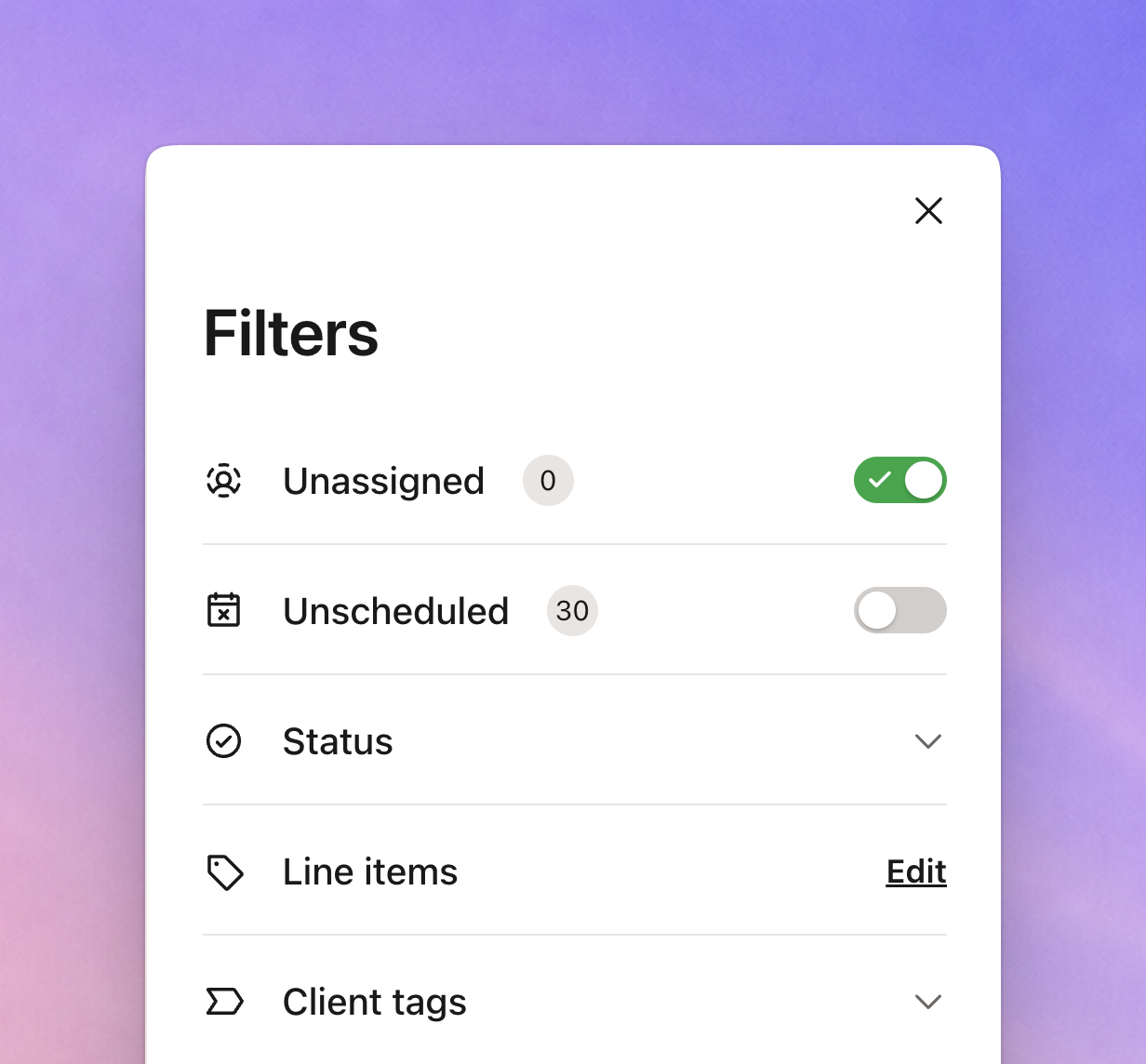
Filter by status, unassigned jobs, line items, or client tags. Each filter shows a count before you apply it. Toggle unassigned to see only what still needs a route. Toggle a status to clear completed work from view.
Reschedule entire routes
Select a route, pick a date, move all stops at once. Undo stays surfaced in the toast. The tricky part was persistence — early versions recalculated on every navigation, so manual moves disappeared. The design keeps moves visible regardless of where the dispatcher navigates.
Detail and control, on any device
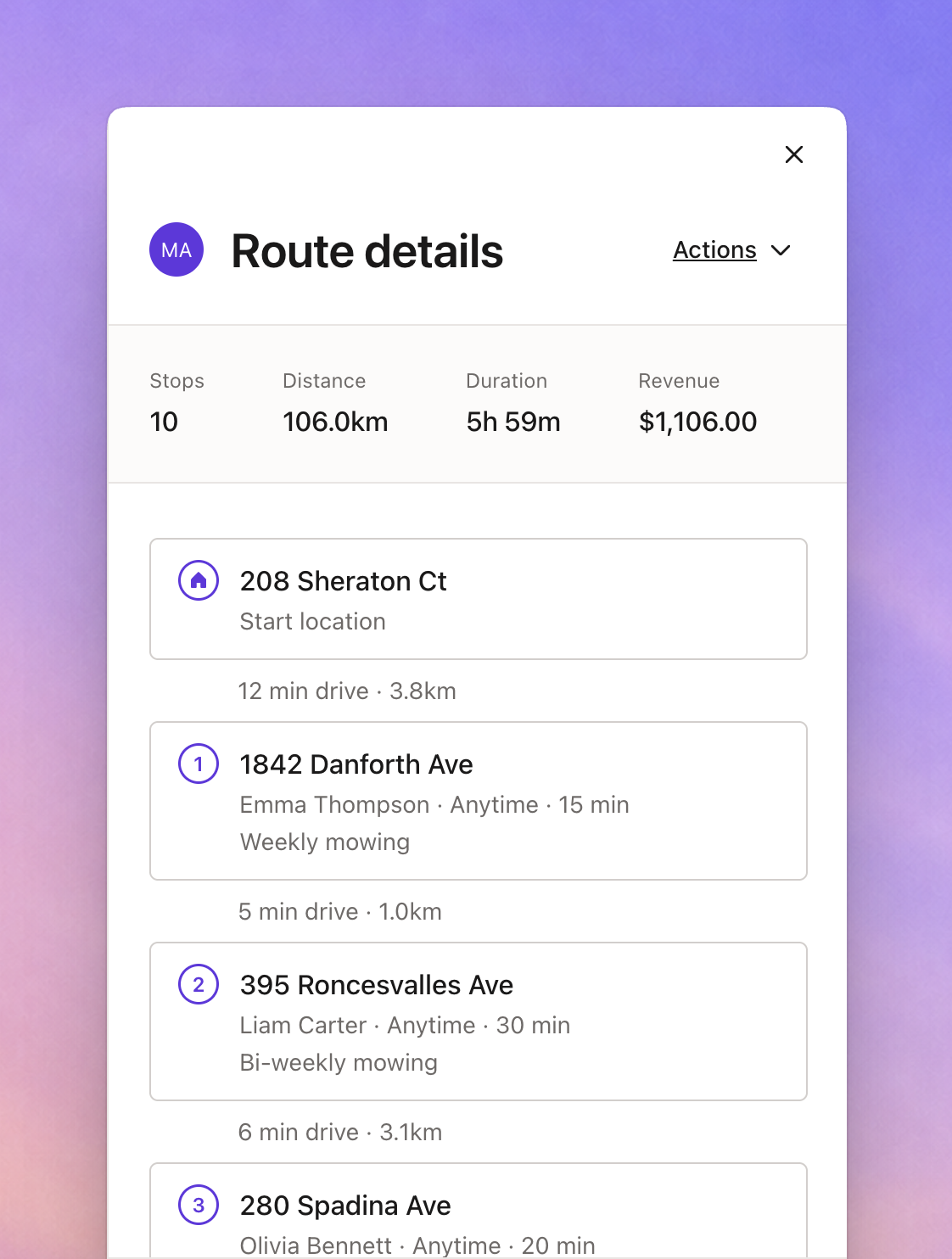
The route details panel is the same on desktop and mobile — stops in order, drive time between each, client name, time window, job type. Resequence, reassign, or edit from either surface. A dispatcher at their desk and a technician in the truck see the same data.
AI auto-assign
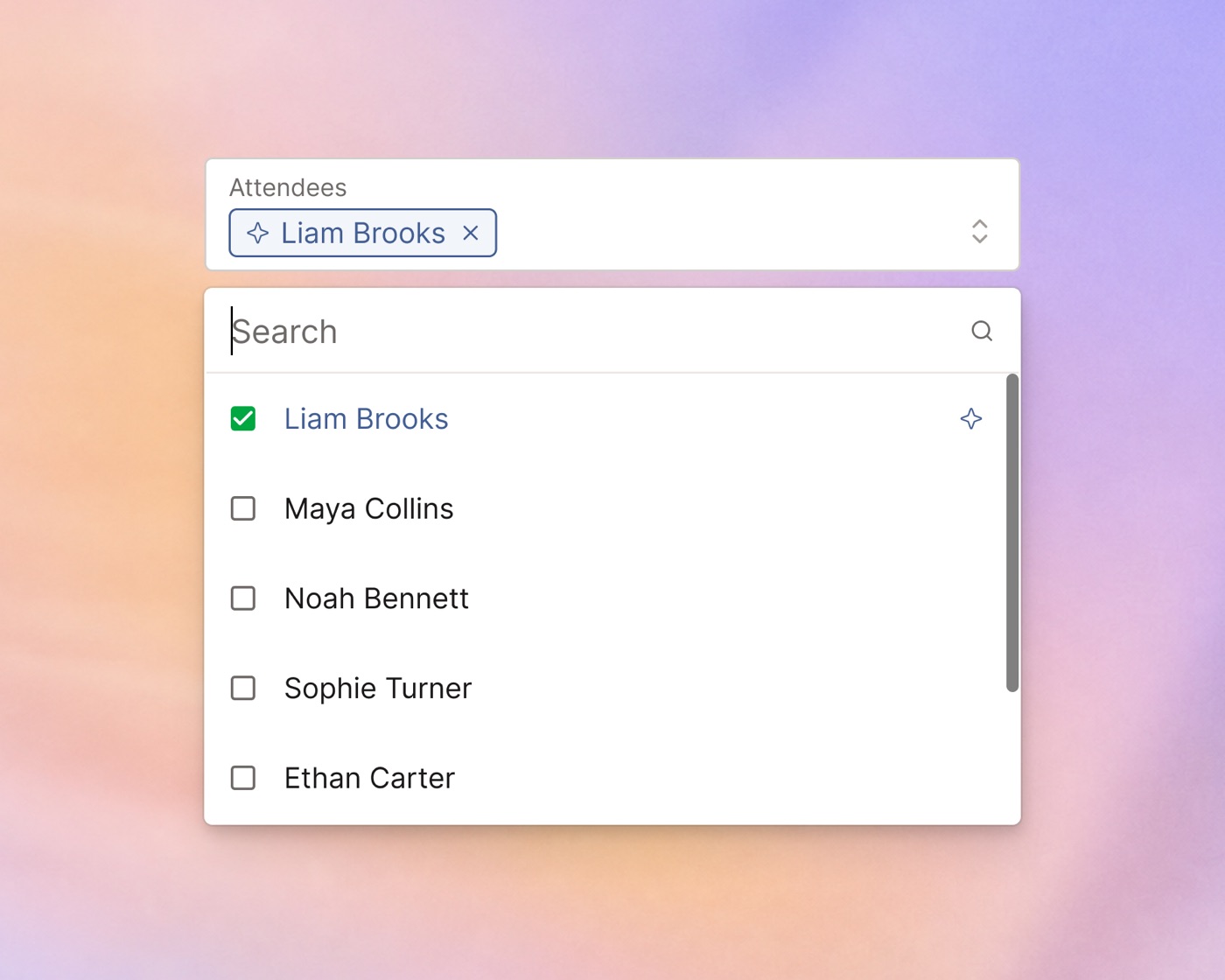
Dispatchers manually juggle availability, proximity, certifications, and client history. The model does it first — surfacing ranked suggestions marked with a sparkle. Accept, swap, or override. The final call stays with the dispatcher.
Conclusion
Saved routes and optimized planning are projected to cut several hours of manual dispatch work per week. We anticipate a meaningful spike in stickiness and new signups — and a substantial drop in routes-related support volume as dispatchers gain the tools to self-serve.
I also built several cross-cutting patterns — timeline lanes, linked map states, drag interactions — designed to be adopted across other surfaces. The work pushed Jobber's visual language further than it had gone before.